Second Skin
Maya Fuhr builds images that feel both intimate and slightly surreal. Working between commercial photography and a fiercely personal art practice, she explores latex, flash, femininity, and transformation – creating a visual language where glamour, discomfort, memory, and sculpture quietly collide.


Growing up in Canada, what early visual cues or cultural influences shaped the way you see?
I grew up in Victoria, BC, and my experience being around nature and being pretty far away from big cities + pop culture definitely shaped the way I see the world. Living in LA, I'm not so far away now – pop culture visuals are in my face constantly, but back in the early 2000s it wasn’t as accessible.
Growing up on an island, I’d escape the dreary weather and find places to fantasize about what else was out there: the one computer in the school’s library, magazines, movies. I remember lurking around the Chapters bookstore when I was a teen in the dead of winter and opening magazines like i-D and Cosmopolitan. It was so different from my surroundings – the bright colours, the fashion, the glossy ads. It was a contrast to Victoria.
When I was younger, I was introduced to plastics and marketing that subconsciously piqued my interest in latex – things like Spice Girls merch (collectable stickers and Barbies) and games like Crazy Bones (knocking out opponents made of hard plastic!). Plastic was a forbidden material in my house (not eco-friendly), so it sort of became an obsession.


“I imagine images like treats saved for later – I leave them for a while and come back when the memory has shifted.”
You split your time between commercial photography and your art practice. How do those two worlds feed each other, and where do they clash in ways that shape the work?
The two worlds totally feed each other and work collectively to allow the other to grow. I enjoy existing in both the commercial world and the art world, and I find balance in my personal projects that fulfill me and the advertising jobs that actually fund my creativity.
Both worlds allow me to collaborate with other people, connect through photography, and discover new story-driven perspectives. If I didn’t have my commercial photography practice – where the vision is quite collaborative – I think I’d get very bored and stuck in my own head. It’s refreshing to build on top of someone else’s ideas.
Even if the job isn’t creative on paper, I’ll find a way to bring my artist’s perspective into it. I would find it hard not to see things through a creative lens. Sometimes, if a job is lacking inspiration, I’ll be bold and test the waters with the clients and ask how comfortable they are with an unconventional twist – for example, someone sitting on the toilet in a campaign as opposed to standing in front of the mirror. I’m not afraid to ask, because the worst thing they can do is say no.


Sometimes it’s challenging in the commercial world if the campaign or brand isn’t relatable or accessible, so I make sure to have artists behind the scenes – assistants, make-up artists, or friends in the casting process. The unique voice of a campaign sometimes comes from the people who make up the community behind the scenes.
With all that being said, I’m grateful for both worlds. When I have the ability to focus on my art practice, I’m so intuitively guided by the process of making that being alone and hiding for a while can be a major recharge. I don’t need permission from anyone else to make art. There’s not much back-and-forth with others. It’s refreshing stepping back into that world of solitude.


Your work often slips between intimacy and distortion. What draws you to images that flirt with the edge of discomfort?
I imagine images like saving treats for later – I leave them for a while and then come back to them. Preserving the images, and the art of patience, has me react more intimately with the work. Over time, the memory and context in which I took the photograph gets distorted.
It’s like trying on my grandma’s leather jacket that I keep in the back of the closet – when I do take it out, it feels different every time. My images take on new meaning gradually.
Images that flirt with discomfort are subjective. The context is in the eye of the viewer – the discomfort is in the viewer’s experience of my work. It’s an interesting question. I wonder if what represents intimacy to me could come across as discomfort to someone else, and vice versa.
I don’t think I’m purposely seeking discomfort, but the image may take on that meaning over time. Analogue photography keeps my mind curious. I’m relying on pure presence, connection, and intimacy with my subjects.


Latex, flash, skin. Your material world feels almost ceremonial. What does transformation mean to you right now?
Working with analogue photography and latex, the ceremony is the mere pleasure of creating and the anticipation that comes with it. I’m trusting the flow of it. I can only see what’s directly in front of me, and my mind goes quiet. It can be euphoric.
To me, transformation means shifting my perspective and taking action, even when I have every reason not to or when the past is dictating some sort of fear. For example, I actually avoided answering these interview questions for a while.
I grew up creating a story about myself that no one was listening to me, and I constantly reinforced that storyline by expressing myself only visually through photography and not with words. I didn’t feel the need to talk about my work.
Transforming that meant not having to express myself only visually, but actually talking about my work and using words to communicate my vision. Answering interviews like this, speaking in front of audiences, doing lectures – that’s transformation from the way I always thought I had to be.
I now own my voice and create and share myself pretty openly. Photography and latex are both about sharing with others, and they can transform and heal people too.
“Sometimes the discomfort in my images doesn’t belong to me at all – it belongs to the viewer.”
Your visual world is so specific. Who or what has shaped your own personal style over the years?
My friends, my community, my husband, my family – being inspired by other artists and trusting my eye to capture them. The universal language of fashion was a way I discovered my personal style.
Since I was a teenager I’ve always used fashion to express myself, and I’ve often dressed people in my own clothing for shoots. Being young and backstage at New York Fashion Week and finding moments to capture amongst the chaos trained my eye in that way too.
Looking back at those photos, it’s almost like I was curating an archive of things I liked, and not photographing the things I didn’t like. The camera was a tool to document that.
My personal style has also been shaped by finding beauty in the mundane. Shopping at places like Goodwill, where beauty arises out of nothing – I love discovering items that once were new and are now old and forgotten. Gucci visited me in my weird home and interviewed me in the midst of hiding laundry piles and roommates. Photographs I took of dust at the MoMA, Chanel shoes plopped on top of garbage bags – I’m instinctively drawn to those kinds of imperfect, contrasting visuals.


What pulled you to Los Angeles, and how has the city shifted the way you work, live, or see?
Luckily, I created the world I wanted – we drove to LA during the pandemic. The inspiration to move there was sun, warmth, access to nature, photographing glamour and decay, and the unknown.
When I lived in Canada, I experienced long winters my whole life, and during those months I was always looking for an escape. Flash photography fulfilled that need.
Looking back at those times, it was like I was creating the brightness that was lacking in the weather and my life. I’d make sculptural lamps and light boxes, and highlight and document crazy fashion and creative communities as tools to bring more light to the darkness.
In LA, there can still be darkness, but there is also so much light. The sun is shining.
“Growing up on an island in the rain, magazines felt like portals – glossy worlds that had nothing to do with where I was.”


You have hinted at a newfound shoe fetish. What sparked this obsession, and how does it weave into your visual or material world right now?
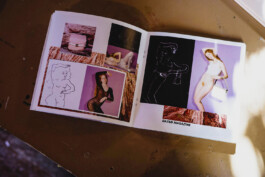
These shoes represent sexuality, femininity, fluidity, and the body. They are open for interpretation. I’ve been making latex shoes that are palpable, oiled, creased, and folded. I created shoe silhouettes where shoes are floating and suspended, taped and manipulated.
I’ve always been really into shoes as objects and sculpture. Something sparked in me in 2020 during the pandemic while I was living in the wilderness at my husband’s cottage before we moved to LA and grappling with my identity and sexuality.
What is femininity without high heels and dressing up? Things went online. I would go to Club Quarantine over Zoom and dress up from the waist up and dance. I started to mourn what I then believed to be feminine parts of myself.
I started making miniature shoes out of clay and awkwardly big, chunky high heels made of plaster, and I’d take self-portraits with them. Later I shot a dominatrix who had these latex shoes with a dildo as the heel. They were beautiful and sculptural. Fetish items and how they interact with the body have always inspired me.


Last summer I was in New York and bought these second-hand Jacquemus heels to wear to an exhibition I was in (Snake Summer, Locker Room Gallery). They looked like beige, skin-like puffy Disney-princess heels and were so uncomfortable. I was standing at the exhibition totally distracted by my pain, taking them off in the corner to give my feet a rest.
When I got back to LA, I painted those heels in latex and made replicas of them as a way to remember and preserve the pain and inconvenience that followed the power and feminine urge of purchasing those high heels. These silhouettes capture the push and pull – the power struggle of that memory.
Last month I was shooting young influencer talent and they were wearing amazing outfits but decided to be shoeless – they were more comfortable that way. It’s almost like high heels have become this faint memory, with the virtual world being mostly from the waist up.
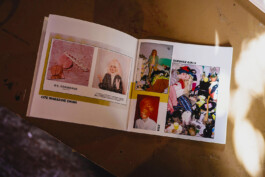
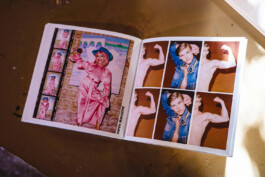
I’m really excited to be premiering this body of work called Sole Parts during the Capture Photography Festival at Equinox Gallery, curated by Nikki Peck, as well as a book coming soon with archives of my shoe photography from 2012–2026.


Second Skin

Maya Fuhr builds images that feel both intimate and slightly surreal. Working between commercial photography and a fiercely personal art practice, she explores latex, flash, femininity, and transformation – creating a visual language where glamour, discomfort, memory, and sculpture quietly collide.


Growing up in Canada, what early visual cues or cultural influences shaped the way you see?
I grew up in Victoria, BC, and my experience being around nature and being pretty far away from big cities + pop culture definitely shaped the way I see the world. Living in LA, I'm not so far away now – pop culture visuals are in my face constantly, but back in the early 2000s it wasn’t as accessible.
Growing up on an island, I’d escape the dreary weather and find places to fantasize about what else was out there: the one computer in the school’s library, magazines, movies. I remember lurking around the Chapters bookstore when I was a teen in the dead of winter and opening magazines like i-D and Cosmopolitan. It was so different from my surroundings – the bright colours, the fashion, the glossy ads. It was a contrast to Victoria.
When I was younger, I was introduced to plastics and marketing that subconsciously piqued my interest in latex – things like Spice Girls merch (collectable stickers and Barbies) and games like Crazy Bones (knocking out opponents made of hard plastic!). Plastic was a forbidden material in my house (not eco-friendly), so it sort of became an obsession.


“I imagine images like treats saved for later – I leave them for a while and come back when the memory has shifted.”
You split your time between commercial photography and your art practice. How do those two worlds feed each other, and where do they clash in ways that shape the work?
The two worlds totally feed each other and work collectively to allow the other to grow. I enjoy existing in both the commercial world and the art world, and I find balance in my personal projects that fulfill me and the advertising jobs that actually fund my creativity.
Both worlds allow me to collaborate with other people, connect through photography, and discover new story-driven perspectives. If I didn’t have my commercial photography practice – where the vision is quite collaborative – I think I’d get very bored and stuck in my own head. It’s refreshing to build on top of someone else’s ideas.
Even if the job isn’t creative on paper, I’ll find a way to bring my artist’s perspective into it. I would find it hard not to see things through a creative lens. Sometimes, if a job is lacking inspiration, I’ll be bold and test the waters with the clients and ask how comfortable they are with an unconventional twist – for example, someone sitting on the toilet in a campaign as opposed to standing in front of the mirror. I’m not afraid to ask, because the worst thing they can do is say no.


Sometimes it’s challenging in the commercial world if the campaign or brand isn’t relatable or accessible, so I make sure to have artists behind the scenes – assistants, make-up artists, or friends in the casting process. The unique voice of a campaign sometimes comes from the people who make up the community behind the scenes.
With all that being said, I’m grateful for both worlds. When I have the ability to focus on my art practice, I’m so intuitively guided by the process of making that being alone and hiding for a while can be a major recharge. I don’t need permission from anyone else to make art. There’s not much back-and-forth with others. It’s refreshing stepping back into that world of solitude.


Your work often slips between intimacy and distortion. What draws you to images that flirt with the edge of discomfort?
I imagine images like saving treats for later – I leave them for a while and then come back to them. Preserving the images, and the art of patience, has me react more intimately with the work. Over time, the memory and context in which I took the photograph gets distorted.
It’s like trying on my grandma’s leather jacket that I keep in the back of the closet – when I do take it out, it feels different every time. My images take on new meaning gradually.
Images that flirt with discomfort are subjective. The context is in the eye of the viewer – the discomfort is in the viewer’s experience of my work. It’s an interesting question. I wonder if what represents intimacy to me could come across as discomfort to someone else, and vice versa.
I don’t think I’m purposely seeking discomfort, but the image may take on that meaning over time. Analogue photography keeps my mind curious. I’m relying on pure presence, connection, and intimacy with my subjects.


Latex, flash, skin. Your material world feels almost ceremonial. What does transformation mean to you right now?
Working with analogue photography and latex, the ceremony is the mere pleasure of creating and the anticipation that comes with it. I’m trusting the flow of it. I can only see what’s directly in front of me, and my mind goes quiet. It can be euphoric.
To me, transformation means shifting my perspective and taking action, even when I have every reason not to or when the past is dictating some sort of fear. For example, I actually avoided answering these interview questions for a while.
I grew up creating a story about myself that no one was listening to me, and I constantly reinforced that storyline by expressing myself only visually through photography and not with words. I didn’t feel the need to talk about my work.
Transforming that meant not having to express myself only visually, but actually talking about my work and using words to communicate my vision. Answering interviews like this, speaking in front of audiences, doing lectures – that’s transformation from the way I always thought I had to be.
I now own my voice and create and share myself pretty openly. Photography and latex are both about sharing with others, and they can transform and heal people too.
“Sometimes the discomfort in my images doesn’t belong to me at all – it belongs to the viewer.”
Your visual world is so specific. Who or what has shaped your own personal style over the years?
My friends, my community, my husband, my family – being inspired by other artists and trusting my eye to capture them. The universal language of fashion was a way I discovered my personal style.
Since I was a teenager I’ve always used fashion to express myself, and I’ve often dressed people in my own clothing for shoots. Being young and backstage at New York Fashion Week and finding moments to capture amongst the chaos trained my eye in that way too.
Looking back at those photos, it’s almost like I was curating an archive of things I liked, and not photographing the things I didn’t like. The camera was a tool to document that.
My personal style has also been shaped by finding beauty in the mundane. Shopping at places like Goodwill, where beauty arises out of nothing – I love discovering items that once were new and are now old and forgotten. Gucci visited me in my weird home and interviewed me in the midst of hiding laundry piles and roommates. Photographs I took of dust at the MoMA, Chanel shoes plopped on top of garbage bags – I’m instinctively drawn to those kinds of imperfect, contrasting visuals.


What pulled you to Los Angeles, and how has the city shifted the way you work, live, or see?
Luckily, I created the world I wanted – we drove to LA during the pandemic. The inspiration to move there was sun, warmth, access to nature, photographing glamour and decay, and the unknown.
When I lived in Canada, I experienced long winters my whole life, and during those months I was always looking for an escape. Flash photography fulfilled that need.
Looking back at those times, it was like I was creating the brightness that was lacking in the weather and my life. I’d make sculptural lamps and light boxes, and highlight and document crazy fashion and creative communities as tools to bring more light to the darkness.
In LA, there can still be darkness, but there is also so much light. The sun is shining.
“Growing up on an island in the rain, magazines felt like portals – glossy worlds that had nothing to do with where I was.”


You have hinted at a newfound shoe fetish. What sparked this obsession, and how does it weave into your visual or material world right now?
These shoes represent sexuality, femininity, fluidity, and the body. They are open for interpretation. I’ve been making latex shoes that are palpable, oiled, creased, and folded. I created shoe silhouettes where shoes are floating and suspended, taped and manipulated.
I’ve always been really into shoes as objects and sculpture. Something sparked in me in 2020 during the pandemic while I was living in the wilderness at my husband’s cottage before we moved to LA and grappling with my identity and sexuality.
What is femininity without high heels and dressing up? Things went online. I would go to Club Quarantine over Zoom and dress up from the waist up and dance. I started to mourn what I then believed to be feminine parts of myself.
I started making miniature shoes out of clay and awkwardly big, chunky high heels made of plaster, and I’d take self-portraits with them. Later I shot a dominatrix who had these latex shoes with a dildo as the heel. They were beautiful and sculptural. Fetish items and how they interact with the body have always inspired me.


Last summer I was in New York and bought these second-hand Jacquemus heels to wear to an exhibition I was in (Snake Summer, Locker Room Gallery). They looked like beige, skin-like puffy Disney-princess heels and were so uncomfortable. I was standing at the exhibition totally distracted by my pain, taking them off in the corner to give my feet a rest.
When I got back to LA, I painted those heels in latex and made replicas of them as a way to remember and preserve the pain and inconvenience that followed the power and feminine urge of purchasing those high heels. These silhouettes capture the push and pull – the power struggle of that memory.
Last month I was shooting young influencer talent and they were wearing amazing outfits but decided to be shoeless – they were more comfortable that way. It’s almost like high heels have become this faint memory, with the virtual world being mostly from the waist up.
I’m really excited to be premiering this body of work called Sole Parts during the Capture Photography Festival at Equinox Gallery, curated by Nikki Peck, as well as a book coming soon with archives of my shoe photography from 2012–2026.