Hyper-Banality
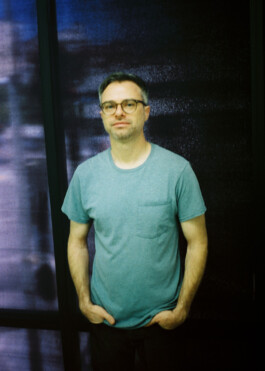
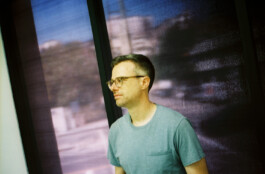
Josh Schaedel grew up in the water, competing as a bodyboarder, before photography pulled him under in the best way. Now splitting his time between photography, teaching, running The Fulcrum Press, and curating a solo show at Gene's Dispensary, he's built a practice around one persistent instinct – slow down, look again, find the joke hiding in plain sight.


You grew up in Huntington, in the water, competing as a bodyboarder, and then wrestling when you weren’t at the beach. How did that rhythm of physical intensity shape the way you see things now?
It is funny because I was just having this same conversation with my mentor Brandon Lattu. What I learned from sports in general is that art isn’t going to kill me. So, I really have no fear in my practice. I'm unafraid to tell artists that I am working with how to make their show better, if they ask. I’m unafraid to tell a student to work harder. I'm unafraid to try new things with my own work.
Do you remember when taking pictures stopped being casual and started feeling like something you could build a life around?
I know this is rare because I have talked about this a lot with other photographers. In my last year of competing as bodyboarder and traveling I could feel my desire to take pictures, and the high it gave me, began to match the feeling when I was locked in riding waves. However, it wasn’t until I was in Indonesia standing on an exposed reef that something clicked. I had to make a decision to run back and grab my gear and get some before the sun set or I could just keep making pictures. I haven’t looked back since.

You move between being an artist, gallerist, art documentarian and commercial photographer, and educator. Do those feel like separate lanes, or has it all blurred into one way of working?
Obviously, you can’t do all of those things all at once but I do try and do a little bit each day. I think my greatest weakness is my greatest strength. I am incredibly dyslexic and ADHD, so I have to shift depending on my moods. So doing all of these things is less of a desire and more of a necessity. For example, usually once a month I will have a day where I basically can’t see words and even numbers start flipping in my mind. It has been so bad that I have literally had to call in sick to work because the world is so confusing. However, the trade off is I see the world so vividly and pictures and creative decisions flow through me like air. So often, in the morning while I cook breakfast for myself I check in with that and allow that to dictate the sequence of things I do that day.


“What I learned from sports is that art isn't going to kill me. So I really have no fear in my practice.”
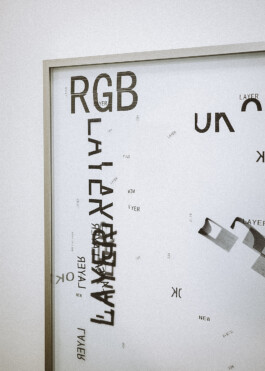
You talk about the “background layer” – the idea of being slightly behind the scenes. Do you naturally gravitate toward that position?
Inherently the nature of photography, in the commercial apparatus, is a service based medium. So when you lift the camera for someone else you are expressing what they are dictating to you. My goal has always been to master the craft in such a way that I can do a better job hearing the nuance of what they want. Once I have entered that place in my mind, when working, I enter that background layer head space. That is when I can make great decisions for both the person I am collaborating with and for myself when the opportunity presents itself.
Sometimes, if I am lucky, I can stay in that head space for several hours and find something out in the world that can then be brought into the studio.
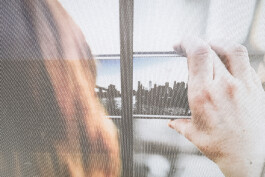
We’re all flooded with images all day. Are you interested in slowing things down and asking viewers to question what they’re looking at?
You are not wrong and I don’t think I am special in wanting folks to slow down. If you can make the viewer pause and look again at things they have already seen in the world and then go back out into their environment and re-examine things they have seen before, but in a new way, then you’ve won at making pictures. I guess where I am different is I am less enamored with beauty.


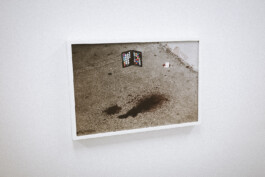
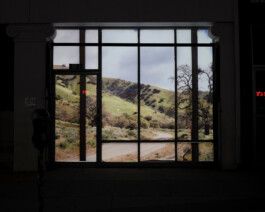
Store Front – No Room
There appears to be a dry humor running through your images. Is that intentional?
I think we forget that conceptual photography has always had a funniness to it. People, especially artists who use photography, take themselves too seriously. I think it is important to take a step back and think about how strangers would approach your work. In many ways, humor makes harder topics more approachable. For example, no one wants to hear me talk about my dyslexia but if I use language in a way that makes people see it broken in a funny or bizarre way then it makes the conversation more approachable. In addition, to misuse objects is both a rebellious and a funny act. I am simply not pretending that either doesn’t exist and being honest with myself and the material.
You’ve talked about “ghost gestures” – things your body just does without thinking. Can you unpack that a bit?
I first learned this when I was younger and transitioned from competitive wrestling to surfing. The physical movement from doing a ‘go-behind’ is the same as doing an air spin (forward or backward) which allowed me to pick it up faster. The same was true when I went from construction painting and seeing the subtle differences in wall paints to color theory or sheens (paint texture and paper texture). So, when I go from shooting thousands of photos for a client with a specific composition, of course when I find a thing out in the world those same compositions will appear in my personal work. That gives me complex feelings. This, for me, is one of my best teaching tools for photography students.


“If you can make the viewer pause and look again at things they've already seen, then go back out and re-examine the world in a new way — you've won at making pictures.”
You seem drawn to signage, storefronts, structures – things designed to communicate something. What keeps pulling you back to those spaces?
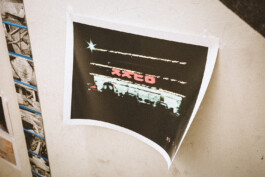
Well, to be frank, images at every turn become more and more desperate for your attention. The absurdity / necessity to get your attention is what I am drawn to. Photography is a weapon of capitalism, and knowing what I know, I feel like it is my duty to disarm it. I think the need is self-reflexive.
In addition, living in Los Angeles we need reasons to pull over and explore. Sometimes I don't know if an advertisement is interesting or not till I actually re-photograph it. Then once an image is made, I simply assume there is another potential photograph around the corner. I figure since I have pulled over now, I might as well continue. I have had times where I have strung together hours and hours of making pictures just because one ad made me curious enough to park my vehicle.


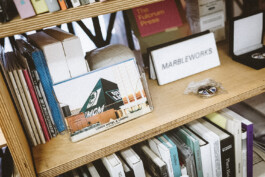
Running The Fulcrum Press puts you on both sides of the equation. Does that change how you think about making your own work?
Absolutely, I am so satisfied with helping others that it allows me to stay focused on what only I can make. I love showing work that if I lived another life, in another body in another time, with other experiences I wish I could make. With the space, it feels like giving away the best gift. It gives me great pleasure giving special people the opportunity and power to disseminate who they are and what they have to say. The joy that act brings brings me, allows me to focus on my work and who I am. People always ask me what do I get out of The Fulcrum project and one of the things I often say is ‘I get to be up close to people I love while they make some of the most important decisions of their lives and I get to learn from that’. So the two things satisfies what the other cannot.
Gene’s Dispensary feels like its own little world. Where did that idea start?
The space is inspired by Eugene V Debs. He was a socialist activist, trade unionist, and master orator. He was also a founding member of the Industrial Workers of the World. Keith J Varadi, who runs Gene’s, has been curating things for several decades and what you're seeing is a mature and calculated sequence of shows that can only be described as a self portrait of the man who runs it.


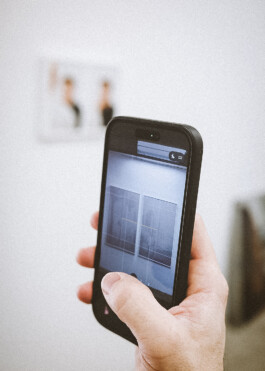
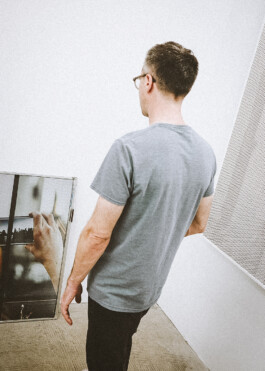
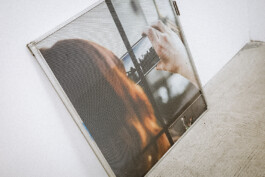
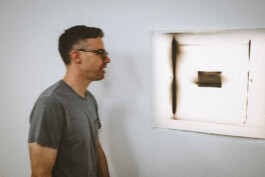
You curated this show ‘Background Layer’ almost like a group exhibition, even though it’s all your work – each piece questioning the viewer’s subjective response to photography in a different way. How did that approach shape the final edit?
Yeah, in all honesty I have been working in ‘big singular gestures’ for the last several years leading up to the show and I wanted to give myself permission to work differently and try new things out. One of my favorite things to do with The Fulcrum is curate group shows and I had the question, ‘what does a group show look like through my own practice?’ and slowly but surely I started to pull images from different projects that started to cohesively let the viewer try on the many hats that I wear in my photographic life.
“Photography is a weapon of capitalism, and knowing what I know, I feel like it's my duty to disarm it.”


What are you starting to get curious about right now that might show up in the next body of work?
I recently was in a really bad car crash. I have many near death experiences in my life before I got into art. So I didn’t have the “Life flash before my eyes” thing but I did have interesting thoughts as I was recovering, ‘what if a normal person (or another version of me… a boring one) had this experience?’. What if in the muti-verse of my life I had continued painting houses like I did as a kid? So, recently I have been thinking about the way your eye travels in the mundane and where the mind goes. So I have been thinking about that a lot and work is taking me into some interesting places, a sort of “Hyper-Banality” as I have been calling it.

Hyper-Banality

Josh Schaedel grew up in the water, competing as a bodyboarder, before photography pulled him under in the best way. Now splitting his time between photography, teaching, running The Fulcrum Press, and curating a solo show at Gene's Dispensary, he's built a practice around one persistent instinct – slow down, look again, find the joke hiding in plain sight.


You grew up in Huntington, in the water, competing as a bodyboarder, and then wrestling when you weren’t at the beach. How did that rhythm of physical intensity shape the way you see things now?
It is funny because I was just having this same conversation with my mentor Brandon Lattu. What I learned from sports in general is that art isn’t going to kill me. So, I really have no fear in my practice. I'm unafraid to tell artists that I am working with how to make their show better, if they ask. I’m unafraid to tell a student to work harder. I'm unafraid to try new things with my own work.
Do you remember when taking pictures stopped being casual and started feeling like something you could build a life around?
I know this is rare because I have talked about this a lot with other photographers. In my last year of competing as bodyboarder and traveling I could feel my desire to take pictures, and the high it gave me, began to match the feeling when I was locked in riding waves. However, it wasn’t until I was in Indonesia standing on an exposed reef that something clicked. I had to make a decision to run back and grab my gear and get some before the sun set or I could just keep making pictures. I haven’t looked back since.

You move between being an artist, gallerist, art documentarian and commercial photographer, and educator. Do those feel like separate lanes, or has it all blurred into one way of working?
Obviously, you can’t do all of those things all at once but I do try and do a little bit each day. I think my greatest weakness is my greatest strength. I am incredibly dyslexic and ADHD, so I have to shift depending on my moods. So doing all of these things is less of a desire and more of a necessity. For example, usually once a month I will have a day where I basically can’t see words and even numbers start flipping in my mind. It has been so bad that I have literally had to call in sick to work because the world is so confusing. However, the trade off is I see the world so vividly and pictures and creative decisions flow through me like air. So often, in the morning while I cook breakfast for myself I check in with that and allow that to dictate the sequence of things I do that day.


“What I learned from sports is that art isn't going to kill me. So I really have no fear in my practice.”
You talk about the “background layer” – the idea of being slightly behind the scenes. Do you naturally gravitate toward that position?
Inherently the nature of photography, in the commercial apparatus, is a service based medium. So when you lift the camera for someone else you are expressing what they are dictating to you. My goal has always been to master the craft in such a way that I can do a better job hearing the nuance of what they want. Once I have entered that place in my mind, when working, I enter that background layer head space. That is when I can make great decisions for both the person I am collaborating with and for myself when the opportunity presents itself.
Sometimes, if I am lucky, I can stay in that head space for several hours and find something out in the world that can then be brought into the studio.
We’re all flooded with images all day. Are you interested in slowing things down and asking viewers to question what they’re looking at?
You are not wrong and I don’t think I am special in wanting folks to slow down. If you can make the viewer pause and look again at things they have already seen in the world and then go back out into their environment and re-examine things they have seen before, but in a new way, then you’ve won at making pictures. I guess where I am different is I am less enamored with beauty.


Store Front – No Room
There appears to be a dry humor running through your images. Is that intentional?
I think we forget that conceptual photography has always had a funniness to it. People, especially artists who use photography, take themselves too seriously. I think it is important to take a step back and think about how strangers would approach your work. In many ways, humor makes harder topics more approachable. For example, no one wants to hear me talk about my dyslexia but if I use language in a way that makes people see it broken in a funny or bizarre way then it makes the conversation more approachable. In addition, to misuse objects is both a rebellious and a funny act. I am simply not pretending that either doesn’t exist and being honest with myself and the material.
You’ve talked about “ghost gestures” – things your body just does without thinking. Can you unpack that a bit?
I first learned this when I was younger and transitioned from competitive wrestling to surfing. The physical movement from doing a ‘go-behind’ is the same as doing an air spin (forward or backward) which allowed me to pick it up faster. The same was true when I went from construction painting and seeing the subtle differences in wall paints to color theory or sheens (paint texture and paper texture). So, when I go from shooting thousands of photos for a client with a specific composition, of course when I find a thing out in the world those same compositions will appear in my personal work. That gives me complex feelings. This, for me, is one of my best teaching tools for photography students.


“If you can make the viewer pause and look again at things they've already seen, then go back out and re-examine the world in a new way — you've won at making pictures.”
You seem drawn to signage, storefronts, structures – things designed to communicate something. What keeps pulling you back to those spaces?
Well, to be frank, images at every turn become more and more desperate for your attention. The absurdity / necessity to get your attention is what I am drawn to. Photography is a weapon of capitalism, and knowing what I know, I feel like it is my duty to disarm it. I think the need is self-reflexive.
In addition, living in Los Angeles we need reasons to pull over and explore. Sometimes I don't know if an advertisement is interesting or not till I actually re-photograph it. Then once an image is made, I simply assume there is another potential photograph around the corner. I figure since I have pulled over now, I might as well continue. I have had times where I have strung together hours and hours of making pictures just because one ad made me curious enough to park my vehicle.


Running The Fulcrum Press puts you on both sides of the equation. Does that change how you think about making your own work?
Absolutely, I am so satisfied with helping others that it allows me to stay focused on what only I can make. I love showing work that if I lived another life, in another body in another time, with other experiences I wish I could make. With the space, it feels like giving away the best gift. It gives me great pleasure giving special people the opportunity and power to disseminate who they are and what they have to say. The joy that act brings brings me, allows me to focus on my work and who I am. People always ask me what do I get out of The Fulcrum project and one of the things I often say is ‘I get to be up close to people I love while they make some of the most important decisions of their lives and I get to learn from that’. So the two things satisfies what the other cannot.
Gene’s Dispensary feels like its own little world. Where did that idea start?
The space is inspired by Eugene V Debs. He was a socialist activist, trade unionist, and master orator. He was also a founding member of the Industrial Workers of the World. Keith J Varadi, who runs Gene’s, has been curating things for several decades and what you're seeing is a mature and calculated sequence of shows that can only be described as a self portrait of the man who runs it.


You curated this show ‘Background Layer’ almost like a group exhibition, even though it’s all your work – each piece questioning the viewer’s subjective response to photography in a different way. How did that approach shape the final edit?
Yeah, in all honesty I have been working in ‘big singular gestures’ for the last several years leading up to the show and I wanted to give myself permission to work differently and try new things out. One of my favorite things to do with The Fulcrum is curate group shows and I had the question, ‘what does a group show look like through my own practice?’ and slowly but surely I started to pull images from different projects that started to cohesively let the viewer try on the many hats that I wear in my photographic life.
“Photography is a weapon of capitalism, and knowing what I know, I feel like it's my duty to disarm it.”


What are you starting to get curious about right now that might show up in the next body of work?
I recently was in a really bad car crash. I have many near death experiences in my life before I got into art. So I didn’t have the “Life flash before my eyes” thing but I did have interesting thoughts as I was recovering, ‘what if a normal person (or another version of me… a boring one) had this experience?’. What if in the muti-verse of my life I had continued painting houses like I did as a kid? So, recently I have been thinking about the way your eye travels in the mundane and where the mind goes. So I have been thinking about that a lot and work is taking me into some interesting places, a sort of “Hyper-Banality” as I have been calling it.