Scent Architect
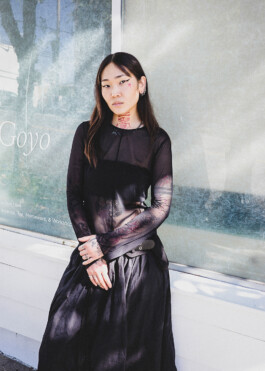
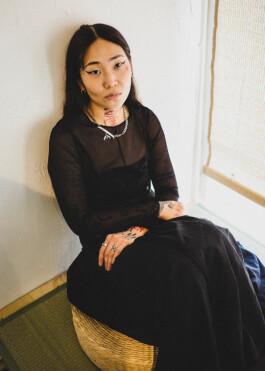
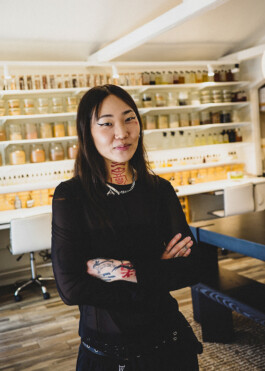
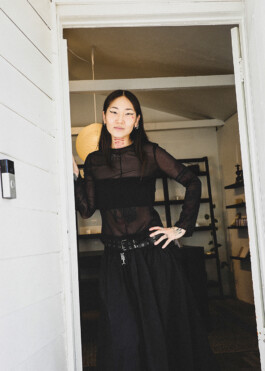
Working between Los Angeles and New York, Hyungi Park approaches scent as both structure and atmosphere. Rooted in ritual, material research, and lived memory, her interdisciplinary practice spans incense, tattooing, and object-making. Balancing the ephemeral with the built, Park creates environments that invite stillness, presence, and a deeper awareness of time.
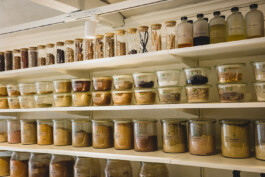
Growing up in North Carolina with Korean parents, how did that dual perspective shape your identity?
I grew up in North Carolina with just my parents and my brother, while the rest of my family remained in Korea. I was the only Korean girl at my school, and my parents assimilated quickly out of necessity, so I didn’t grow up with a Korean community around me. Because of that, my relationship to my culture developed much later in life – it wasn’t something I inherited through proximity, but something I had to consciously seek out and reconstruct for myself.
Now, living between Los Angeles and New York, where there are large Korean diasporic communities, I’m aware of how different my upbringing was from that of many other Korean Americans. And yet, despite those differences, there are still shared emotional and cultural threads that connect us. That tension between distance and recognition continues to shape how I understand my identity.
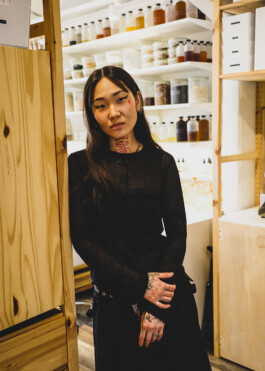
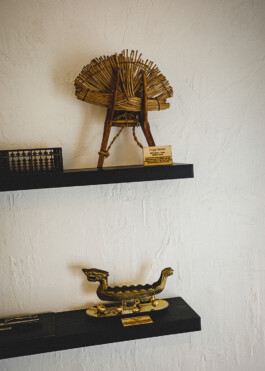
You studied fine art with a focus on sculpture. How did thinking in three dimensions shape your relationship to material?
I studied fine art with a focus on sculpture, though interestingly, during and immediately after school I wasn’t focused on object-making at all – I was immersed in performance art. I was drawn to the ephemeral: ritual, gesture, time-based experience. My research into rituals – their tools and material components – is what first led me to incense. Scent felt like the perfect medium: intangible, atmospheric, and deeply tied to time, memory, and ceremony.
In hindsight, I sometimes wish I had taken fuller advantage of my access to fabrication resources and technical training in school, because I’m now deeply invested in building – both functional objects and physical environments. I love constructing the spaces I live and work in, and that impulse toward structure and tactility has become central to my practice. Even so, my work remains interdisciplinary: materially grounded and three-dimensional, yet always in dialogue with the ephemeral.
“Rather than beginning with an ingredient, I start with an emotional prompt – a psychological atmosphere I want to translate into fragrance.”
You split your time between Los Angeles and New York. What does each city open up creatively?
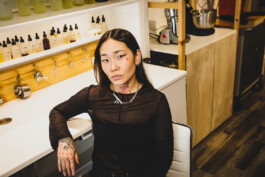
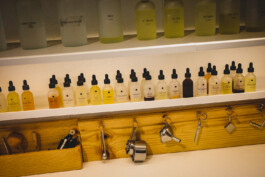
I split my time between Los Angeles and New York. I lived in New York before moving to LA seven years ago, and for the past two years I’ve been fully bi-coastal, moving between the two every few weeks. I opened Goyo (my studio) in both cities, and when people ask which one I prefer, I genuinely can’t choose – they offer completely different energies, each filling what the other lacks.
Los Angeles is where I produce and ideate. It’s slower, more spacious, and allows me to experiment, build, and think with clarity. It feels grounding – physically and mentally. New York, by contrast, is fueled by people and momentum. It’s dense with inspiration and constant movement. My life there is fast and outward-facing, while LA gives me the solitude to reflect and recalibrate. Together, they create a necessary balance in both my work and my inner life.
Foraging is a quiet but constant thread in your work – what are you typically gathering in the landscapes around LA?
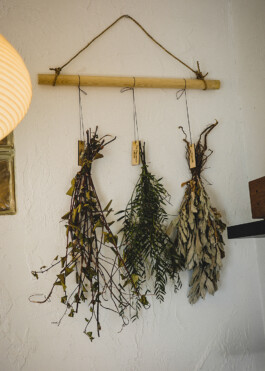
One of the most beautiful aspects of being in Los Angeles is the accessibility of native California plants, especially near the mountains where I live in Tujunga. I forage mindfully – never over-harvesting, often collecting overgrowth or clippings that people generously offer – but being so close to the landscape has deeply influenced my work. In the surrounding hills, I find California sagebrush, native sages, California bay, juniper, and pink peppercorn leaves. In Joshua Tree, there’s creosote bush – chaparral – with its distinct petrichor-like scent that feels almost elemental.
What excites me most is working with materials that are difficult, if not impossible, to source commercially. Harvesting locally makes the process more intentional and site-specific; the materials carry the geography within them. It transforms the act of making into something relational – rooted in place, season, and presence.
You’ve described incense as a “tiny structure of time.” When did scent last stop you in your tracks?
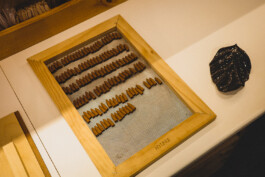
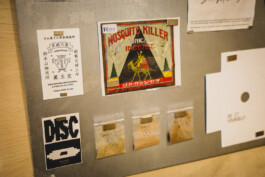
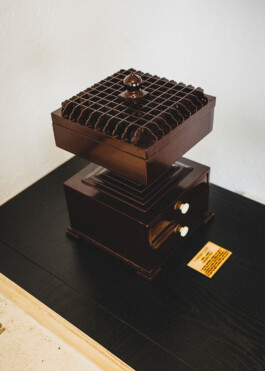
Historically, incense was far more than fragrance – it was a tool for measuring time. Incense clocks and other calibrated devices used the steady burn of powdered incense to mark hours, ritual intervals, and daily rhythms. I’m deeply fascinated by that functionality. Incense has always been multifaceted: spiritual, atmospheric, medicinal, insect-repellent, even a precursor to modern perfumery. Its ability to operate across so many registers – practical and poetic at once – is what continues to draw me in.
The last scent that truly stopped me in my tracks was an incense from Yamadamatsu in Japan, designed to evoke the smell of traditional ink. It carried a subtle camphor nuance – smoky, resinous, and quietly deep. It felt historical yet intimate. Moments like that reaffirm my interest in researching traditional materials and processes, then reinterpreting them through a contemporary lens – honoring lineage while allowing space for innovation.
“While incense defines a space, a wearable scent becomes part of someone’s identity.”
You’re developing a range of perfumes. What is scent opening up for you that other mediums haven’t?
My work has always been rooted in the ephemeral, and scent is perhaps the most overlooked yet powerful medium we have. It’s often the first thing we register when entering a space, and it’s profoundly tied to memory – capable of collapsing time in an instant. I’ve always thought of incense not simply as a product, but as a tool: something that shapes atmosphere, ritual, and emotional space.
The most meaningful compliments I’ve received reflect that. Once, a friend walked into a room where my incense was burning and said, “It smells like my home.” Another has used my incense on her altar to honor someone who had passed. Both moments felt deeply sacred to me. Perfume, however, is even more intimate – it lives on the body. While incense defines a space, a wearable scent becomes part of someone’s identity. To have someone carry my work with them in that way would feel like an equal, if not greater, honor.
If you could distill a single memory into a fragrance, what would it hold?
I tend to approach scent-making abstractly. Rather than beginning with a specific ingredient, I start with an emotional prompt – a mood, a feeling, a psychological atmosphere that I want to translate into fragrance. My newest body of work, the Cityscape collection, is rooted in memory. Each scent reflects a city and the way it lives in me – not as a literal recreation of a single moment, but as an impression shaped by lived experience.
For example, Terra is inspired by Raleigh, North Carolina, where I grew up. I lived near a lake and would walk there after school each day. The fragrance is built around wet earth – grounded, slightly smoky, softened by morning dew. There’s vetiver, a touch of spice, and a subtle hint of ginseng. It evokes damp soil after a campfire, that quiet, humid stillness of the South. For me, that scent is childhood – not in a narrative sense, but in atmosphere.
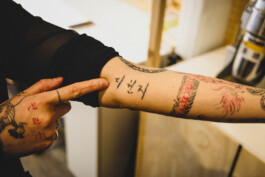
Tattooing entered your life early – what first pulled you toward the medium?
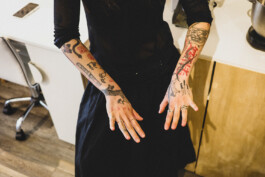
I’ve been tattooing for ten years, and I began in a very DIY way – completely self-taught. I initially got into tattooing simply because I wanted more tattoos and couldn’t afford them, so I started hand-poking myself in my bedroom. Over time, I transitioned to machine work and now use a traditional coil machine, which I often build myself. There’s something deeply satisfying about understanding the mechanics behind the tool as much as the mark it creates.
Interestingly, I came to tattooing from the opposite direction of most artists. Many people begin with a love of drawing and move toward tattooing; I began with a love of tattoos themselves. Drawing didn’t come naturally to me, and I struggled for years to find a visual language that felt authentic. That voice emerged gradually – largely through tattooing myself – and I realized others were drawn to that same sensibility. It wasn’t a calculated style; it evolved organically through practice.
“Harvesting locally makes the process more intentional and site-specific; the materials carry the geography within them.”
Do you tattoo yourself – and any recent additions?
Yes, I’ve tattooed myself extensively – especially in the beginning. While I don’t necessarily encourage it, it was one of the most valuable ways I learned. Tattooing yourself allows you to feel everything: the depth of the needle, how the skin responds, how the piece heals, what holds and what falls out. It creates an immediate feedback loop that’s difficult to replicate otherwise. It taught me as much about restraint and precision as it did about technique.
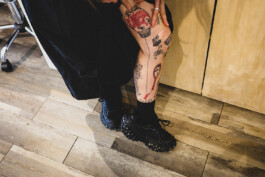
It’s also far more physically challenging than people assume – not because of the pain, but because of the posture. Reaching certain areas contorts your body in uncomfortable ways; tattooing your upper leg, for example, can be brutal on your back. I recently tattooed my thigh again – though I’m admittedly running out of reachable space – with a piece inspired by a traditional Korean vase I saw in an exhibition titled Korean Treasures.
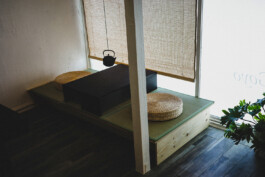
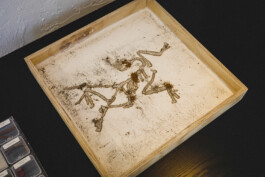
You’ve taught yourself an impressive range of processes, from bookbinding to laser cutting. What are you curious to learn next?
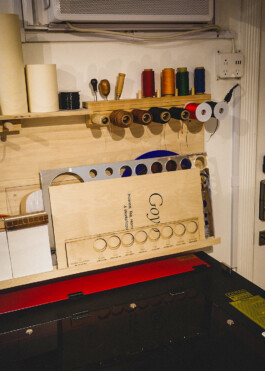
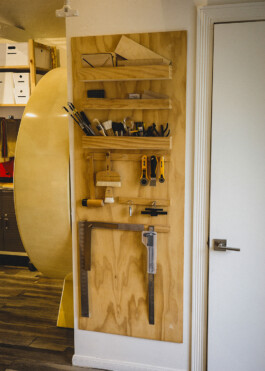
I love learning new skills, and I especially love collecting tools. Tools are my favorite objects because they hold possibility – each one suggests something I haven’t made yet. I taught myself bookbinding over a decade ago out of pure necessity. As a left-handed person, I found most notebooks frustrating to use, so I learned Coptic stitch binding, which allows pages to lay completely flat. From there, I began laser cutting to create custom covers. I’ve always been comfortable teaching myself software – my mother has a background in computer science, and as a child I would sit at her workplace learning programs like Dreamweaver just to pass the time. That early exposure made it easier for me to pick up design and fabrication tools later on.
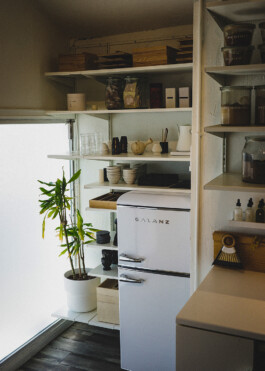
Now, I’m interested in expanding further into 3D printing and ceramics. I have a 3D printer and see it as a way to prototype forms that could later be slip-cast. It feels like a natural progression: if I make incense, I should also make the vessels it burns in. I’ve recently set up a ceramics space in my studio, complete with a kiln and tools. The next step is simply committing the time to learn. For me, each new medium isn’t a departure – it’s an extension of the same impulse to build, experiment, and shape the environments around me.
When it comes to collaborations, what makes one feel worth pursuing?
Over the years, I’ve become far more intentional about collaboration. I’ve worked across a wide range of partnerships, and what I’ve learned is that alignment – creative, ethical, and practical – is essential. It’s important to be clear about what each person hopes to gain and whether the dynamic is genuinely reciprocal. At this stage, I’m most interested in collaborating with people who feel creatively aligned, where there’s mutual respect and a shared level of rigor.
If the collaboration is with a larger corporation, I approach it with the same principle. I’m realistic about sustainability – making a living matters – but never at the expense of compromising my values or diluting my work. The project has to feel authentic to my practice. Ultimately, regardless of scale, I only move forward when there’s clear alignment and the integrity of my work remains intact.
What feels quietly on the horizon for you right now?
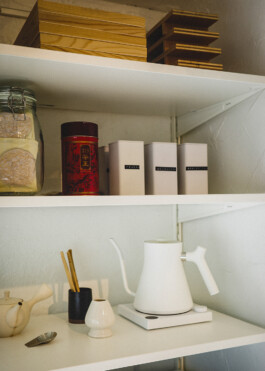
Right now, the vision is still forming, but my long-term goal is to build a small-scale incense factory in the United States. In many ways, I’m already operating on that path – but I want to grow it intentionally. Very little incense is produced domestically, and much of what’s available on the market is synthetically fragranced or chemically treated. I’m interested in establishing a U.S.-based manufacturing practice rooted in transparency, material integrity, and historical understanding.
My commitment to incense goes beyond passion. I’ve spent nearly a decade researching not only the technical aspects of production, but also its cultural histories, regional variations, ritual functions, and environmental contexts. Incense exists differently across geographies – shaped by indigenous materials, climate, and tradition. That depth of study allows me to approach it with both reverence and innovation. Ultimately, I see this as a balance: continuing to develop my own creative work while also offering thoughtful production for others, expanding what incense can be.
Scent Architect
Working between Los Angeles and New York, Hyungi Park approaches scent as both structure and atmosphere. Rooted in ritual, material research, and lived memory, her interdisciplinary practice spans incense, tattooing, and object-making. Balancing the ephemeral with the built, Park creates environments that invite stillness, presence, and a deeper awareness of time.
Growing up in North Carolina with Korean parents, how did that dual perspective shape your identity?
I grew up in North Carolina with just my parents and my brother, while the rest of my family remained in Korea. I was the only Korean girl at my school, and my parents assimilated quickly out of necessity, so I didn’t grow up with a Korean community around me. Because of that, my relationship to my culture developed much later in life – it wasn’t something I inherited through proximity, but something I had to consciously seek out and reconstruct for myself.
Now, living between Los Angeles and New York, where there are large Korean diasporic communities, I’m aware of how different my upbringing was from that of many other Korean Americans. And yet, despite those differences, there are still shared emotional and cultural threads that connect us. That tension between distance and recognition continues to shape how I understand my identity.
You studied fine art with a focus on sculpture. How did thinking in three dimensions shape your relationship to material?
I studied fine art with a focus on sculpture, though interestingly, during and immediately after school I wasn’t focused on object-making at all – I was immersed in performance art. I was drawn to the ephemeral: ritual, gesture, time-based experience. My research into rituals – their tools and material components – is what first led me to incense. Scent felt like the perfect medium: intangible, atmospheric, and deeply tied to time, memory, and ceremony.
In hindsight, I sometimes wish I had taken fuller advantage of my access to fabrication resources and technical training in school, because I’m now deeply invested in building – both functional objects and physical environments. I love constructing the spaces I live and work in, and that impulse toward structure and tactility has become central to my practice. Even so, my work remains interdisciplinary: materially grounded and three-dimensional, yet always in dialogue with the ephemeral.
“Rather than beginning with an ingredient, I start with an emotional prompt – a psychological atmosphere I want to translate into fragrance.”
You split your time between Los Angeles and New York. What does each city open up creatively?
I split my time between Los Angeles and New York. I lived in New York before moving to LA seven years ago, and for the past two years I’ve been fully bi-coastal, moving between the two every few weeks. I opened Goyo (my studio) in both cities, and when people ask which one I prefer, I genuinely can’t choose – they offer completely different energies, each filling what the other lacks.
Los Angeles is where I produce and ideate. It’s slower, more spacious, and allows me to experiment, build, and think with clarity. It feels grounding – physically and mentally. New York, by contrast, is fueled by people and momentum. It’s dense with inspiration and constant movement. My life there is fast and outward-facing, while LA gives me the solitude to reflect and recalibrate. Together, they create a necessary balance in both my work and my inner life.
Foraging is a quiet but constant thread in your work – what are you typically gathering in the landscapes around LA?
One of the most beautiful aspects of being in Los Angeles is the accessibility of native California plants, especially near the mountains where I live in Tujunga. I forage mindfully – never over-harvesting, often collecting overgrowth or clippings that people generously offer – but being so close to the landscape has deeply influenced my work. In the surrounding hills, I find California sagebrush, native sages, California bay, juniper, and pink peppercorn leaves. In Joshua Tree, there’s creosote bush – chaparral – with its distinct petrichor-like scent that feels almost elemental.
What excites me most is working with materials that are difficult, if not impossible, to source commercially. Harvesting locally makes the process more intentional and site-specific; the materials carry the geography within them. It transforms the act of making into something relational – rooted in place, season, and presence.
You’ve described incense as a “tiny structure of time.” When did scent last stop you in your tracks?
Historically, incense was far more than fragrance – it was a tool for measuring time. Incense clocks and other calibrated devices used the steady burn of powdered incense to mark hours, ritual intervals, and daily rhythms. I’m deeply fascinated by that functionality. Incense has always been multifaceted: spiritual, atmospheric, medicinal, insect-repellent, even a precursor to modern perfumery. Its ability to operate across so many registers – practical and poetic at once – is what continues to draw me in.
The last scent that truly stopped me in my tracks was an incense from Yamadamatsu in Japan, designed to evoke the smell of traditional ink. It carried a subtle camphor nuance – smoky, resinous, and quietly deep. It felt historical yet intimate. Moments like that reaffirm my interest in researching traditional materials and processes, then reinterpreting them through a contemporary lens – honoring lineage while allowing space for innovation.
“While incense defines a space, a wearable scent becomes part of someone’s identity.”
You’re developing a range of perfumes. What is scent opening up for you that other mediums haven’t?
My work has always been rooted in the ephemeral, and scent is perhaps the most overlooked yet powerful medium we have. It’s often the first thing we register when entering a space, and it’s profoundly tied to memory – capable of collapsing time in an instant. I’ve always thought of incense not simply as a product, but as a tool: something that shapes atmosphere, ritual, and emotional space.
The most meaningful compliments I’ve received reflect that. Once, a friend walked into a room where my incense was burning and said, “It smells like my home.” Another has used my incense on her altar to honor someone who had passed. Both moments felt deeply sacred to me. Perfume, however, is even more intimate – it lives on the body. While incense defines a space, a wearable scent becomes part of someone’s identity. To have someone carry my work with them in that way would feel like an equal, if not greater, honor.
If you could distill a single memory into a fragrance, what would it hold?
I tend to approach scent-making abstractly. Rather than beginning with a specific ingredient, I start with an emotional prompt – a mood, a feeling, a psychological atmosphere that I want to translate into fragrance. My newest body of work, the Cityscape collection, is rooted in memory. Each scent reflects a city and the way it lives in me – not as a literal recreation of a single moment, but as an impression shaped by lived experience.
For example, Terra is inspired by Raleigh, North Carolina, where I grew up. I lived near a lake and would walk there after school each day. The fragrance is built around wet earth – grounded, slightly smoky, softened by morning dew. There’s vetiver, a touch of spice, and a subtle hint of ginseng. It evokes damp soil after a campfire, that quiet, humid stillness of the South. For me, that scent is childhood – not in a narrative sense, but in atmosphere.
Tattooing entered your life early – what first pulled you toward the medium?
I’ve been tattooing for ten years, and I began in a very DIY way – completely self-taught. I initially got into tattooing simply because I wanted more tattoos and couldn’t afford them, so I started hand-poking myself in my bedroom. Over time, I transitioned to machine work and now use a traditional coil machine, which I often build myself. There’s something deeply satisfying about understanding the mechanics behind the tool as much as the mark it creates.
Interestingly, I came to tattooing from the opposite direction of most artists. Many people begin with a love of drawing and move toward tattooing; I began with a love of tattoos themselves. Drawing didn’t come naturally to me, and I struggled for years to find a visual language that felt authentic. That voice emerged gradually – largely through tattooing myself – and I realized others were drawn to that same sensibility. It wasn’t a calculated style; it evolved organically through practice.
“Harvesting locally makes the process more intentional and site-specific; the materials carry the geography within them.”
Do you tattoo yourself – and any recent additions?
Yes, I’ve tattooed myself extensively – especially in the beginning. While I don’t necessarily encourage it, it was one of the most valuable ways I learned. Tattooing yourself allows you to feel everything: the depth of the needle, how the skin responds, how the piece heals, what holds and what falls out. It creates an immediate feedback loop that’s difficult to replicate otherwise. It taught me as much about restraint and precision as it did about technique.
It’s also far more physically challenging than people assume – not because of the pain, but because of the posture. Reaching certain areas contorts your body in uncomfortable ways; tattooing your upper leg, for example, can be brutal on your back. I recently tattooed my thigh again – though I’m admittedly running out of reachable space – with a piece inspired by a traditional Korean vase I saw in an exhibition titled Korean Treasures.
You’ve taught yourself an impressive range of processes, from bookbinding to laser cutting. What are you curious to learn next?
I love learning new skills, and I especially love collecting tools. Tools are my favorite objects because they hold possibility – each one suggests something I haven’t made yet. I taught myself bookbinding over a decade ago out of pure necessity. As a left-handed person, I found most notebooks frustrating to use, so I learned Coptic stitch binding, which allows pages to lay completely flat. From there, I began laser cutting to create custom covers. I’ve always been comfortable teaching myself software – my mother has a background in computer science, and as a child I would sit at her workplace learning programs like Dreamweaver just to pass the time. That early exposure made it easier for me to pick up design and fabrication tools later on.
Now, I’m interested in expanding further into 3D printing and ceramics. I have a 3D printer and see it as a way to prototype forms that could later be slip-cast. It feels like a natural progression: if I make incense, I should also make the vessels it burns in. I’ve recently set up a ceramics space in my studio, complete with a kiln and tools. The next step is simply committing the time to learn. For me, each new medium isn’t a departure – it’s an extension of the same impulse to build, experiment, and shape the environments around me.
When it comes to collaborations, what makes one feel worth pursuing?
Over the years, I’ve become far more intentional about collaboration. I’ve worked across a wide range of partnerships, and what I’ve learned is that alignment – creative, ethical, and practical – is essential. It’s important to be clear about what each person hopes to gain and whether the dynamic is genuinely reciprocal. At this stage, I’m most interested in collaborating with people who feel creatively aligned, where there’s mutual respect and a shared level of rigor.
If the collaboration is with a larger corporation, I approach it with the same principle. I’m realistic about sustainability – making a living matters – but never at the expense of compromising my values or diluting my work. The project has to feel authentic to my practice. Ultimately, regardless of scale, I only move forward when there’s clear alignment and the integrity of my work remains intact.
What feels quietly on the horizon for you right now?
Right now, the vision is still forming, but my long-term goal is to build a small-scale incense factory in the United States. In many ways, I’m already operating on that path – but I want to grow it intentionally. Very little incense is produced domestically, and much of what’s available on the market is synthetically fragranced or chemically treated. I’m interested in establishing a U.S.-based manufacturing practice rooted in transparency, material integrity, and historical understanding.
My commitment to incense goes beyond passion. I’ve spent nearly a decade researching not only the technical aspects of production, but also its cultural histories, regional variations, ritual functions, and environmental contexts. Incense exists differently across geographies – shaped by indigenous materials, climate, and tradition. That depth of study allows me to approach it with both reverence and innovation. Ultimately, I see this as a balance: continuing to develop my own creative work while also offering thoughtful production for others, expanding what incense can be.