Art Reaper
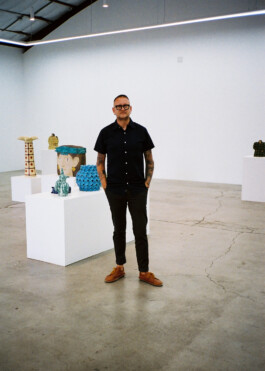
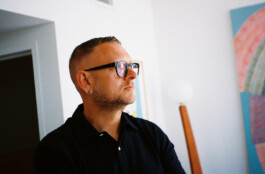
Adam D. Miller went from ArtCenter painter to gallerist almost by accident, then clay rerouted everything. Between Ultraman busts, goth dinnerware dreamed up with his kids, a punk soundtrack on loop, and The Pit's ever-expanding world, Miller treats art, design, and everyday life as one long, restless conversation.
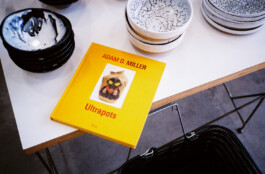
You were a studio assistant to Sterling Ruby and a teaching assistant to Jim Shaw – two very different artists with very different energies. What did each of them teach you?
My relationship with each of them was actually quite different. I worked much more closely with Sterling Ruby as a studio assistant and for a much longer period of time, while my role with Jim Shaw was primarily as his teaching assistant at ArtCenter College of Design while I was working towards my Master’s Degree.
Even though I wasn’t working directly in Jim’s studio, I was always inspired by the way he draws from popular culture and subcultures, personal experiences, dreams, and the overlooked corners of everyday life. His willingness to treat those things as legitimate subject matter was incredibly influential. It gave me confidence to embrace personal narratives and unconventional references in my own work rather than feeling like I needed to separate them from a contemporary art practice.
Working with Sterling had a much more direct impact on how I think about being a creative person. What impressed me wasn’t just the artwork itself, but the expansiveness of the practice. There was an openness to moving between fine art, craft, design, publishing, and everyday objects without worrying about where one category ended and another began. I also learned a great deal about the realities of running an active studio and building a sustainable creative career. Seeing an artist extend their practice beyond exhibitions and into books, products, collaborations, and other forms of production was incredibly influential. It reinforced the idea that creativity doesn’t have to exist within a single lane, and that’s something I’ve carried with me in my own work as an artist, designer, curator, and gallerist.
Jim’s work certainly inspired me to embrace the personal, idiosyncratic, and my weird interests outside of contemporary art, while Sterling demonstrated how expansive a creative life can be.
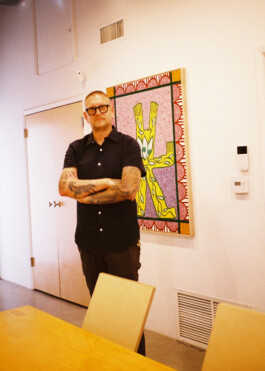
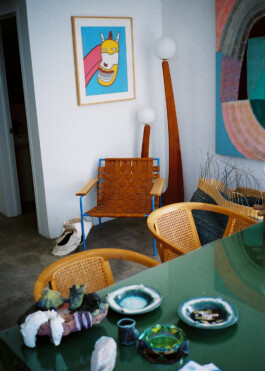
“It reminded me why I wanted to make art in the first place.”
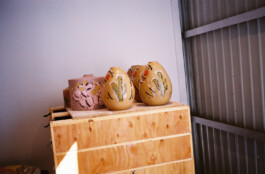
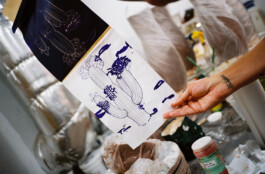
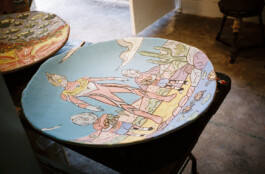
You started as a painter. What did clay give you that paint couldn’t?
I was actually a painter for much longer than I’ve been a ceramic artist. I went to ArtCenter primarily as a painter and continued making paintings and drawings for nearly a decade after graduate school. My earliest exhibitions were all painting and drawing shows.
When we opened The Pit in 2014, a lot of my energy shifted toward building a community and creating opportunities for other artists. Over time, the gallery was having more success than my own studio practice, and by 2018 I was feeling very discouraged. My wife and I were expecting our second child, I was working constantly, and painting had become more of a source of frustration than fulfillment. I was honestly starting to think that maybe my role in the art world was going to be just as a gallerist rather than as an exhibiting artist.
Around that same time, Tony Marsh came into my life. Tony was the longtime head of the ceramics department at Cal State Long Beach and a pivotal figure in Southern California ceramics. He founded the university’s residency program, which became a gathering place for generations of ceramic artists and helped shape the region’s ceramic community. We had produced several exhibitions with Cal State Long Beach and had a solo exhibition with Tony in the books, so I was spending a lot of time around him and the ceramics department. Tony kept looking at my drawings and saying, “These should be ceramics.” He knew that I had experience helping produce ceramic work for other artists, but I explained that I didn’t have a kiln, didn’t have a ceramics studio, and couldn’t realistically make that transition. Tony responded by making me an artist-in-residence and helping create a pathway for me to experiment with clay. A student assistant would build simple vessel forms for me, I would bring them back to my studio at The Pit to work on them, and then return them to Long Beach for firing. It was an incredibly generous gesture and one that completely changed the course of my life.
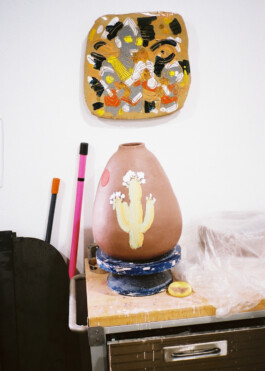
When I first sat down with the clay, I had no idea what to make. I was staring at these simple tube-like forms and trying to come up with an idea. The first thing that popped into my head was, “I’ll make a bust of Ultraman’s helmet.” My immediate reaction was that it was probably the dumbest thing I could possibly make art about.
ArtCenter was a very theory-driven environment, and even years later I still felt like every artwork had to be intellectually justified. It had to be smart. It had to be about something important. Making an Ultraman head felt completely opposed to that way of thinking.
So I made it anyway.
It was one of the most liberating experiences I’d had in the studio in years. I wasn’t thinking about exhibitions, critics, sales, or career advancement. In fact, I assumed nobody would ever see the work. I was just having fun. Then I made another one, and another one, and eventually a whole group of them.
Those pieces ended up sitting in my studio at The Pit where visitors would occasionally see them. Eventually I was offered an exhibition. The show opened shortly after the pandemic lockdowns, so almost nobody saw it in person, but most of the work sold. I took that money, bought a large kiln, converted my studio into a ceramics studio, and never really looked back.
It’s been almost ten years since I’ve made a painting. I’m actually trying to make three new ones for an exhibition this September, so we’ll see how that goes. I still miss painting sometimes, but I haven’t found the same sense of joy and experimentation in any other medium that I’ve found working with clay. Looking back, that’s what clay gave me. It reminded me why I wanted to make art in the first place.
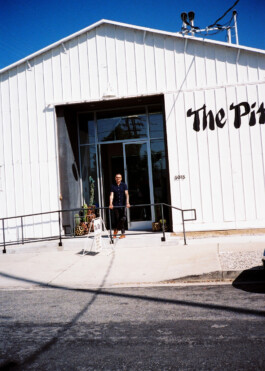
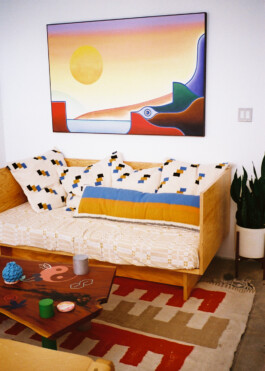
How did you transition into lighting and design?
The move into lighting feels like a natural extension of that journey rather than a departure from it.
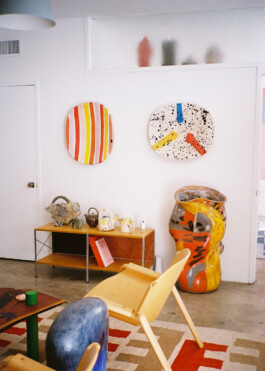
When I met David Alhadeff and Laura Young at The Future Perfect in 2022, they were incredibly generous and encouraging. I was already a huge fan of the gallery and the designers that they work with so I was very excited when they showed interest in working with me. One of the things I had always loved about ceramics was that it could comfortably inhabit both the art and design worlds. A vessel can function as a sculpture, but it can also live in someone’s home and become part of everyday life. David and Laura immediately understood that aspect of the work and encouraged me to think beyond vessels and expand into furniture and lighting.
In reality, those interests had been there long before I started working in clay. Most people don’t know that I was originally a graphic design major before switching to studio art as an undergraduate. Throughout my career I’ve continued to move between those worlds. I’ve designed exhibition graphics, catalogs, publications, advertisements, many T-shirts and different types of merch, and most of the visual materials for The Pit. Design has always been part of how I think.
What I enjoy about design is that it exercises a different part of my creative brain. With my fine art work, I’m often thinking about narrative, autobiography, symbolism, and building a body of work that carries a specific meaning or point of view. Design is different. The focus shifts toward materials, form, function, proportion, and aesthetics. There’s something really refreshing about spending months working on a group of sculptures or vessels that carry a personal narrative and then being able to turn that part of my brain off and focus on making a beautiful object that people can live with and use.
Because of that, moving into lighting didn’t feel like a dramatic shift. It felt more like reconnecting with another side of my creative life. The ceramics, furniture, lighting, graphic design, and gallery work all feel connected to me. They’re different ways of exploring materials, objects, and visual culture.
Looking back, I think the biggest lesson has been to stop worrying so much about categories or strategies. Some of the best things that have happened in my career – from making that first Ultraman head to designing my first lamp – came from following curiosity rather than following a plan.
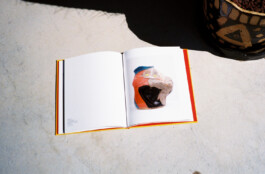
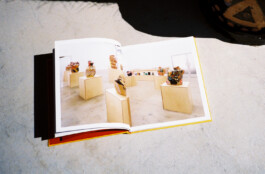
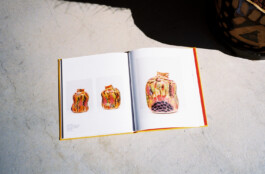
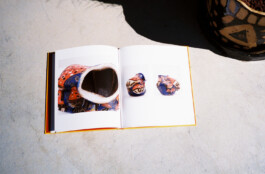
Ultrapots – Adam D. Miller
Ultrapots – Adam D. Miller
Ultrapots – Adam D. Miller
Ultrapots – Adam D. Miller
“There's something funny about putting a Grim Reaper on a coffee mug.”
The Pit’s program has this specific commitment to California art history – material exploration, counterculture, design. How do you keep that conversation alive without it feeling like a museum exercise?
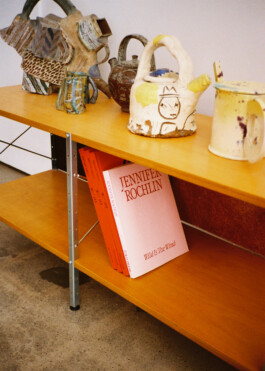
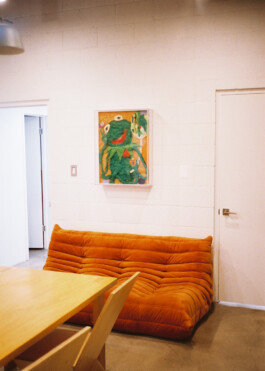
I’ve never been interested in California art history as something that needs to be preserved behind glass. To me, it’s a living conversation that’s still unfolding. The artists that inspire me most aren’t necessarily the ones recreating the past, but the ones carrying forward that spirit of experimentation in new and unexpected ways.
One of the things that’s always made California unique is how porous the boundaries are between art, craft, design, surf culture, punk culture, DIY communities, and other alternative ways of living and making. Those influences have always crossed paths here, and I think that’s still true today. The gallery isn’t driven by nostalgia so much as a desire to find artists who share that openness and willingness to experiment with materials, ideas, and forms.
That’s also why we intentionally mix established artists with younger and emerging voices in the program. I think the conversation stays alive when different generations are in dialogue with one another. The goal isn’t to present California art history as a finished chapter – it’s to show that it’s still being written. And, from a personal standpoint to be able to work with older established artists, or estates, whom I have studied and been a fan of their work for many years or who continue to heavily influence younger generations of artists is a dream come true. When The Pit took on Viola Frey’s estate that was one of the most meaningful moments for me in my career.
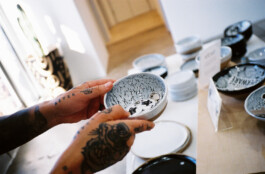
Reaperware is described as “folksy and super Goth” which is honestly a great combo. You’ve talked about wanting it to be accessible – hand-built objects people can actually live with. How did this project come about?
Reaperware came about in a pretty accidental way. In 2021, my wife Devon and I purchased a small fixer-upper cabin in Yucca Valley. It had been a dream of ours to own a place in the high desert for years. We’ve been spending time out there together since 2006 and always loved the landscape, the architecture, and the creative community that surrounds Joshua Tree and Yucca Valley. We designed the house ourselves and became deeply involved in every decision – from the furniture and artwork to the landscaping, finishes, and overall aesthetic. It became a really personal creative project for our family. My studio produced handmade tiles for the house. I chose all the cacti and plants myself and designed all the landscaping. We really transformed the house into a bohemian dream for our family.
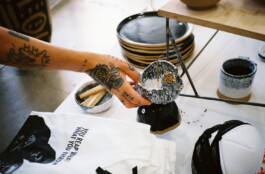
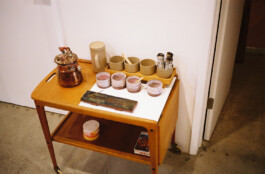
At some point during the process, I thought it would be fun to make all of the dishware for the house. So I started making plates, bowls, mugs, and serving pieces without much of a plan beyond wanting to use them ourselves. Once I finished the first batch, I realized that the hard part was already done. I had worked out the forms, the glaze, and the production process. I remember thinking, “Well, what if I just make a hundred more of these?” Suddenly it felt less like a side project and more like the beginning of a company.
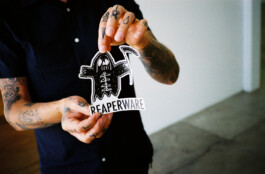
Around the same time, my son River and I were spending a lot of time drawing together during the pandemic. We became obsessed with drawing little ghosts. What fascinated me was that River had developed this very distinctive way of drawing them. Instead of starting with the head like most people do, he would begin with a zig-zag line at the bottom of the figure and build the ghost upward from there. We must have made hundreds of those drawings together. At a certain point I added a skull face and a staff, and the Reaper character was born.
What made it all click was that the dishware was already designed around a black-and-white palette. The Grim Reaper fit perfectly. I’ve always wanted my creative work to reflect my personal interests, whether that’s horror movies, goth music, punk culture, or DIY subcultures. Suddenly all of those things came together in a way that felt natural. I could make something beautiful, handmade, and design-oriented while still allowing it to feel a little dark, expressive, and personal.
I also think there’s an important sense of humor in the project. I’ve never been very interested in art, design, or galleries that take themselves too seriously. Reaperware felt like the perfect balance. It’s thoughtfully designed and carefully made, but it’s also a little ridiculous. There’s something funny about putting a Grim Reaper on a coffee mug or a dinner plate. That combination of sincerity and silliness is a big part of its appeal to me.
I think that’s why people respond to Reaperware. On one hand it’s functional pottery that you can use every day. On the other hand, it still carries the personality and storytelling that I care about in my fine art practice. It’s probably the clearest example of how art, craft, design, and everyday life have all merged together in my work.
“Some of the best things in my career came from following curiosity rather than a plan.”
You’re also a parent raising kids in LA. Does that change how you think about the art you put into the world, or what the gallery should be doing?
Absolutely. Becoming a parent has probably changed my perspective on success more than anything else. When I was younger, I thought mostly about exhibitions, career milestones, and the traditional markers of achievement in the art world. Having kids has a way of recalibrating your priorities.
It’s also made me think more about community. Running a gallery can sometimes feel like you’re speaking to a relatively small audience, but I increasingly find myself interested in how art can connect to everyday life and have a broader impact. That’s part of the reason we’ve invested so much energy into community programs, fundraisers, and more recently things like hosting children’s art camps. I’m very excited that this summer rather than doing a gallery’s traditional summer group show, we have partnered with the ReDiscover Center. It’s a non-profit organization that does kids arts eduction with recycled materials. They have an emphasis on environmental stewardship. They’re going to be doing kids art camps out of the gallery for the months of July and August, and we have installed an outdoor sculpture exhibition in the garden across the street which can be visited and enjoyed by the general community who come to this area. So, we’re really trying to activate the spaces in exciting, new and engaging ways and trying to make art more accessible to everyone. I want The Pit to be a place that contributes to the neighborhood and to people’s lives, not just a place where art is bought and sold.
On a personal level, my kids have had a direct influence on my work. River helped inspire Reaperware. The Ultraman sculptures are filled with references to family life. The newest ones that I’m making all involve turtles, which is a love letter to my younger son Logan and his love for turtles.
Some of my favorite ideas have come from paying attention to the way children see the world – with curiosity, humor, and a willingness to embrace things that adults might dismiss as too simple or too strange. More than anything, being a parent has reminded me that creativity isn’t separate from life. The best work I’ve made has come from embracing the people, experiences, and relationships that matter most to me rather than trying to keep art and life in separate boxes.
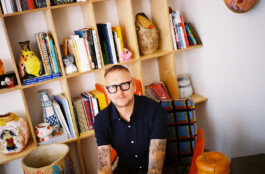
What will you be showing at Mindy Solomon Gallery and GattoPardo this year?
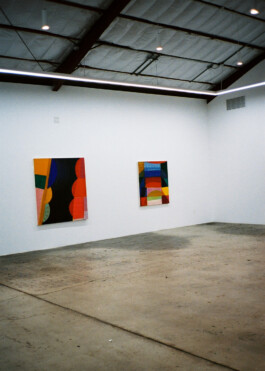
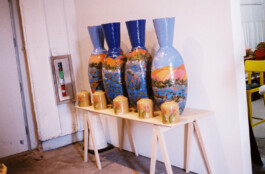
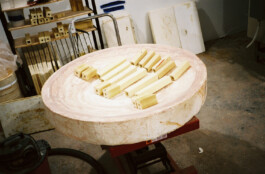
I’m currently finishing the works for Gattopardo. The exhibition will open in September. I’ll be presenting a new body of ceramic sculptures and vessels that continue my interest in autobiography, family, popular culture, and landscape. The Ultraman figures will still be present along with a lot of turtles as I mentioned previously, but the work has become more ambitious in scale and complexity. I’m interested in how these recurring characters can function almost like stand-ins within larger narratives about family life, memory, and place. For the first time I’m making these very large platters that can hang on the wall or sit flat in space. I’ll be back at Cal State Long Beach as they’re helping me to fire all of them. They’re too large for my kiln in my studio. I’m excited to be back there and to have them involved again. I’m not certain the direction of the Mindy Solomon show yet, but I believe it will be a mix of fine art vessels along with functional pieces. I’m also in the process of designing mosaic covered tables and stools which I’m hoping to be able to release in 2027.
Are we still blasting punk music in the studio?
My tastes are a bit more eclectic but I listen to a lot of first generation punk; Ramones, Misfits, Cramps, etc. I mainly listen to punk, metal, new wave, and industrial and all the subgenres associated with those while working in the studio.
Art Reaper
Adam D. Miller went from ArtCenter painter to gallerist almost by accident, then clay rerouted everything. Between Ultraman busts, goth dinnerware dreamed up with his kids, a punk soundtrack on loop, and The Pit's ever-expanding world, Miller treats art, design, and everyday life as one long, restless conversation.
You were a studio assistant to Sterling Ruby and a teaching assistant to Jim Shaw – two very different artists with very different energies. What did each of them teach you?
My relationship with each of them was actually quite different. I worked much more closely with Sterling Ruby as a studio assistant and for a much longer period of time, while my role with Jim Shaw was primarily as his teaching assistant at ArtCenter College of Design while I was working towards my Master’s Degree.
Even though I wasn’t working directly in Jim’s studio, I was always inspired by the way he draws from popular culture and subcultures, personal experiences, dreams, and the overlooked corners of everyday life. His willingness to treat those things as legitimate subject matter was incredibly influential. It gave me confidence to embrace personal narratives and unconventional references in my own work rather than feeling like I needed to separate them from a contemporary art practice.
Working with Sterling had a much more direct impact on how I think about being a creative person. What impressed me wasn’t just the artwork itself, but the expansiveness of the practice. There was an openness to moving between fine art, craft, design, publishing, and everyday objects without worrying about where one category ended and another began. I also learned a great deal about the realities of running an active studio and building a sustainable creative career. Seeing an artist extend their practice beyond exhibitions and into books, products, collaborations, and other forms of production was incredibly influential. It reinforced the idea that creativity doesn’t have to exist within a single lane, and that’s something I’ve carried with me in my own work as an artist, designer, curator, and gallerist.
Jim’s work certainly inspired me to embrace the personal, idiosyncratic, and my weird interests outside of contemporary art, while Sterling demonstrated how expansive a creative life can be.
“It reminded me why I wanted to make art in the first place.”
You started as a painter. What did clay give you that paint couldn’t?
I was actually a painter for much longer than I’ve been a ceramic artist. I went to ArtCenter primarily as a painter and continued making paintings and drawings for nearly a decade after graduate school. My earliest exhibitions were all painting and drawing shows.
When we opened The Pit in 2014, a lot of my energy shifted toward building a community and creating opportunities for other artists. Over time, the gallery was having more success than my own studio practice, and by 2018 I was feeling very discouraged. My wife and I were expecting our second child, I was working constantly, and painting had become more of a source of frustration than fulfillment. I was honestly starting to think that maybe my role in the art world was going to be just as a gallerist rather than as an exhibiting artist.
Around that same time, Tony Marsh came into my life. Tony was the longtime head of the ceramics department at Cal State Long Beach and a pivotal figure in Southern California ceramics. He founded the university’s residency program, which became a gathering place for generations of ceramic artists and helped shape the region’s ceramic community. We had produced several exhibitions with Cal State Long Beach and had a solo exhibition with Tony in the books, so I was spending a lot of time around him and the ceramics department. Tony kept looking at my drawings and saying, “These should be ceramics.” He knew that I had experience helping produce ceramic work for other artists, but I explained that I didn’t have a kiln, didn’t have a ceramics studio, and couldn’t realistically make that transition. Tony responded by making me an artist-in-residence and helping create a pathway for me to experiment with clay. A student assistant would build simple vessel forms for me, I would bring them back to my studio at The Pit to work on them, and then return them to Long Beach for firing. It was an incredibly generous gesture and one that completely changed the course of my life.
When I first sat down with the clay, I had no idea what to make. I was staring at these simple tube-like forms and trying to come up with an idea. The first thing that popped into my head was, “I’ll make a bust of Ultraman’s helmet.” My immediate reaction was that it was probably the dumbest thing I could possibly make art about.
ArtCenter was a very theory-driven environment, and even years later I still felt like every artwork had to be intellectually justified. It had to be smart. It had to be about something important. Making an Ultraman head felt completely opposed to that way of thinking.
So I made it anyway.
It was one of the most liberating experiences I’d had in the studio in years. I wasn’t thinking about exhibitions, critics, sales, or career advancement. In fact, I assumed nobody would ever see the work. I was just having fun. Then I made another one, and another one, and eventually a whole group of them.
Those pieces ended up sitting in my studio at The Pit where visitors would occasionally see them. Eventually I was offered an exhibition. The show opened shortly after the pandemic lockdowns, so almost nobody saw it in person, but most of the work sold. I took that money, bought a large kiln, converted my studio into a ceramics studio, and never really looked back.
It’s been almost ten years since I’ve made a painting. I’m actually trying to make three new ones for an exhibition this September, so we’ll see how that goes. I still miss painting sometimes, but I haven’t found the same sense of joy and experimentation in any other medium that I’ve found working with clay. Looking back, that’s what clay gave me. It reminded me why I wanted to make art in the first place.
How did you transition into lighting and design?
The move into lighting feels like a natural extension of that journey rather than a departure from it.
When I met David Alhadeff and Laura Young at The Future Perfect in 2022, they were incredibly generous and encouraging. I was already a huge fan of the gallery and the designers that they work with so I was very excited when they showed interest in working with me. One of the things I had always loved about ceramics was that it could comfortably inhabit both the art and design worlds. A vessel can function as a sculpture, but it can also live in someone’s home and become part of everyday life. David and Laura immediately understood that aspect of the work and encouraged me to think beyond vessels and expand into furniture and lighting.
In reality, those interests had been there long before I started working in clay. Most people don’t know that I was originally a graphic design major before switching to studio art as an undergraduate. Throughout my career I’ve continued to move between those worlds. I’ve designed exhibition graphics, catalogs, publications, advertisements, many T-shirts and different types of merch, and most of the visual materials for The Pit. Design has always been part of how I think.
What I enjoy about design is that it exercises a different part of my creative brain. With my fine art work, I’m often thinking about narrative, autobiography, symbolism, and building a body of work that carries a specific meaning or point of view. Design is different. The focus shifts toward materials, form, function, proportion, and aesthetics. There’s something really refreshing about spending months working on a group of sculptures or vessels that carry a personal narrative and then being able to turn that part of my brain off and focus on making a beautiful object that people can live with and use.
Because of that, moving into lighting didn’t feel like a dramatic shift. It felt more like reconnecting with another side of my creative life. The ceramics, furniture, lighting, graphic design, and gallery work all feel connected to me. They’re different ways of exploring materials, objects, and visual culture.
Looking back, I think the biggest lesson has been to stop worrying so much about categories or strategies. Some of the best things that have happened in my career – from making that first Ultraman head to designing my first lamp – came from following curiosity rather than following a plan.
Ultrapots – Adam D. Miller
Ultrapots – Adam D. Miller
Ultrapots – Adam D. Miller
Ultrapots – Adam D. Miller
“There's something funny about putting a Grim Reaper on a coffee mug.”
The Pit’s program has this specific commitment to California art history – material exploration, counterculture, design. How do you keep that conversation alive without it feeling like a museum exercise?
I’ve never been interested in California art history as something that needs to be preserved behind glass. To me, it’s a living conversation that’s still unfolding. The artists that inspire me most aren’t necessarily the ones recreating the past, but the ones carrying forward that spirit of experimentation in new and unexpected ways.
One of the things that’s always made California unique is how porous the boundaries are between art, craft, design, surf culture, punk culture, DIY communities, and other alternative ways of living and making. Those influences have always crossed paths here, and I think that’s still true today. The gallery isn’t driven by nostalgia so much as a desire to find artists who share that openness and willingness to experiment with materials, ideas, and forms.
That’s also why we intentionally mix established artists with younger and emerging voices in the program. I think the conversation stays alive when different generations are in dialogue with one another. The goal isn’t to present California art history as a finished chapter – it’s to show that it’s still being written. And, from a personal standpoint to be able to work with older established artists, or estates, whom I have studied and been a fan of their work for many years or who continue to heavily influence younger generations of artists is a dream come true. When The Pit took on Viola Frey’s estate that was one of the most meaningful moments for me in my career.
Reaperware is described as “folksy and super Goth” which is honestly a great combo. You’ve talked about wanting it to be accessible – hand-built objects people can actually live with. How did this project come about?
Reaperware came about in a pretty accidental way. In 2021, my wife Devon and I purchased a small fixer-upper cabin in Yucca Valley. It had been a dream of ours to own a place in the high desert for years. We’ve been spending time out there together since 2006 and always loved the landscape, the architecture, and the creative community that surrounds Joshua Tree and Yucca Valley. We designed the house ourselves and became deeply involved in every decision – from the furniture and artwork to the landscaping, finishes, and overall aesthetic. It became a really personal creative project for our family. My studio produced handmade tiles for the house. I chose all the cacti and plants myself and designed all the landscaping. We really transformed the house into a bohemian dream for our family.
At some point during the process, I thought it would be fun to make all of the dishware for the house. So I started making plates, bowls, mugs, and serving pieces without much of a plan beyond wanting to use them ourselves. Once I finished the first batch, I realized that the hard part was already done. I had worked out the forms, the glaze, and the production process. I remember thinking, “Well, what if I just make a hundred more of these?” Suddenly it felt less like a side project and more like the beginning of a company.
Around the same time, my son River and I were spending a lot of time drawing together during the pandemic. We became obsessed with drawing little ghosts. What fascinated me was that River had developed this very distinctive way of drawing them. Instead of starting with the head like most people do, he would begin with a zig-zag line at the bottom of the figure and build the ghost upward from there. We must have made hundreds of those drawings together. At a certain point I added a skull face and a staff, and the Reaper character was born.
What made it all click was that the dishware was already designed around a black-and-white palette. The Grim Reaper fit perfectly. I’ve always wanted my creative work to reflect my personal interests, whether that’s horror movies, goth music, punk culture, or DIY subcultures. Suddenly all of those things came together in a way that felt natural. I could make something beautiful, handmade, and design-oriented while still allowing it to feel a little dark, expressive, and personal.
I also think there’s an important sense of humor in the project. I’ve never been very interested in art, design, or galleries that take themselves too seriously. Reaperware felt like the perfect balance. It’s thoughtfully designed and carefully made, but it’s also a little ridiculous. There’s something funny about putting a Grim Reaper on a coffee mug or a dinner plate. That combination of sincerity and silliness is a big part of its appeal to me.
I think that’s why people respond to Reaperware. On one hand it’s functional pottery that you can use every day. On the other hand, it still carries the personality and storytelling that I care about in my fine art practice. It’s probably the clearest example of how art, craft, design, and everyday life have all merged together in my work.
“Some of the best things in my career came from following curiosity rather than a plan.”
You’re also a parent raising kids in LA. Does that change how you think about the art you put into the world, or what the gallery should be doing?
Absolutely. Becoming a parent has probably changed my perspective on success more than anything else. When I was younger, I thought mostly about exhibitions, career milestones, and the traditional markers of achievement in the art world. Having kids has a way of recalibrating your priorities.
It’s also made me think more about community. Running a gallery can sometimes feel like you’re speaking to a relatively small audience, but I increasingly find myself interested in how art can connect to everyday life and have a broader impact. That’s part of the reason we’ve invested so much energy into community programs, fundraisers, and more recently things like hosting children’s art camps. I’m very excited that this summer rather than doing a gallery’s traditional summer group show, we have partnered with the ReDiscover Center. It’s a non-profit organization that does kids arts eduction with recycled materials. They have an emphasis on environmental stewardship. They’re going to be doing kids art camps out of the gallery for the months of July and August, and we have installed an outdoor sculpture exhibition in the garden across the street which can be visited and enjoyed by the general community who come to this area. So, we’re really trying to activate the spaces in exciting, new and engaging ways and trying to make art more accessible to everyone. I want The Pit to be a place that contributes to the neighborhood and to people’s lives, not just a place where art is bought and sold.
On a personal level, my kids have had a direct influence on my work. River helped inspire Reaperware. The Ultraman sculptures are filled with references to family life. The newest ones that I’m making all involve turtles, which is a love letter to my younger son Logan and his love for turtles.
Some of my favorite ideas have come from paying attention to the way children see the world – with curiosity, humor, and a willingness to embrace things that adults might dismiss as too simple or too strange. More than anything, being a parent has reminded me that creativity isn’t separate from life. The best work I’ve made has come from embracing the people, experiences, and relationships that matter most to me rather than trying to keep art and life in separate boxes.
What will you be showing at Mindy Solomon Gallery and GattoPardo this year?
I’m currently finishing the works for Gattopardo. The exhibition will open in September. I’ll be presenting a new body of ceramic sculptures and vessels that continue my interest in autobiography, family, popular culture, and landscape. The Ultraman figures will still be present along with a lot of turtles as I mentioned previously, but the work has become more ambitious in scale and complexity. I’m interested in how these recurring characters can function almost like stand-ins within larger narratives about family life, memory, and place. For the first time I’m making these very large platters that can hang on the wall or sit flat in space. I’ll be back at Cal State Long Beach as they’re helping me to fire all of them. They’re too large for my kiln in my studio. I’m excited to be back there and to have them involved again. I’m not certain the direction of the Mindy Solomon show yet, but I believe it will be a mix of fine art vessels along with functional pieces. I’m also in the process of designing mosaic covered tables and stools which I’m hoping to be able to release in 2027.
Are we still blasting punk music in the studio?
My tastes are a bit more eclectic but I listen to a lot of first generation punk; Ramones, Misfits, Cramps, etc. I mainly listen to punk, metal, new wave, and industrial and all the subgenres associated with those while working in the studio.